The Shallows in the Deep
And so we return to The Morning Routine and ask, "What was that about?"

When I wrote, “You just need a bruise you can’t explain, a stain you can’t wash out, and a newspaper clipping tacked to your cathode ray tube monitor,” I wasn’t advocating for boilerplate banality. I was arguing for restraint. A bruise is different from an autopsy. A stain is different from a stigma. A clipping is different from a memoir.
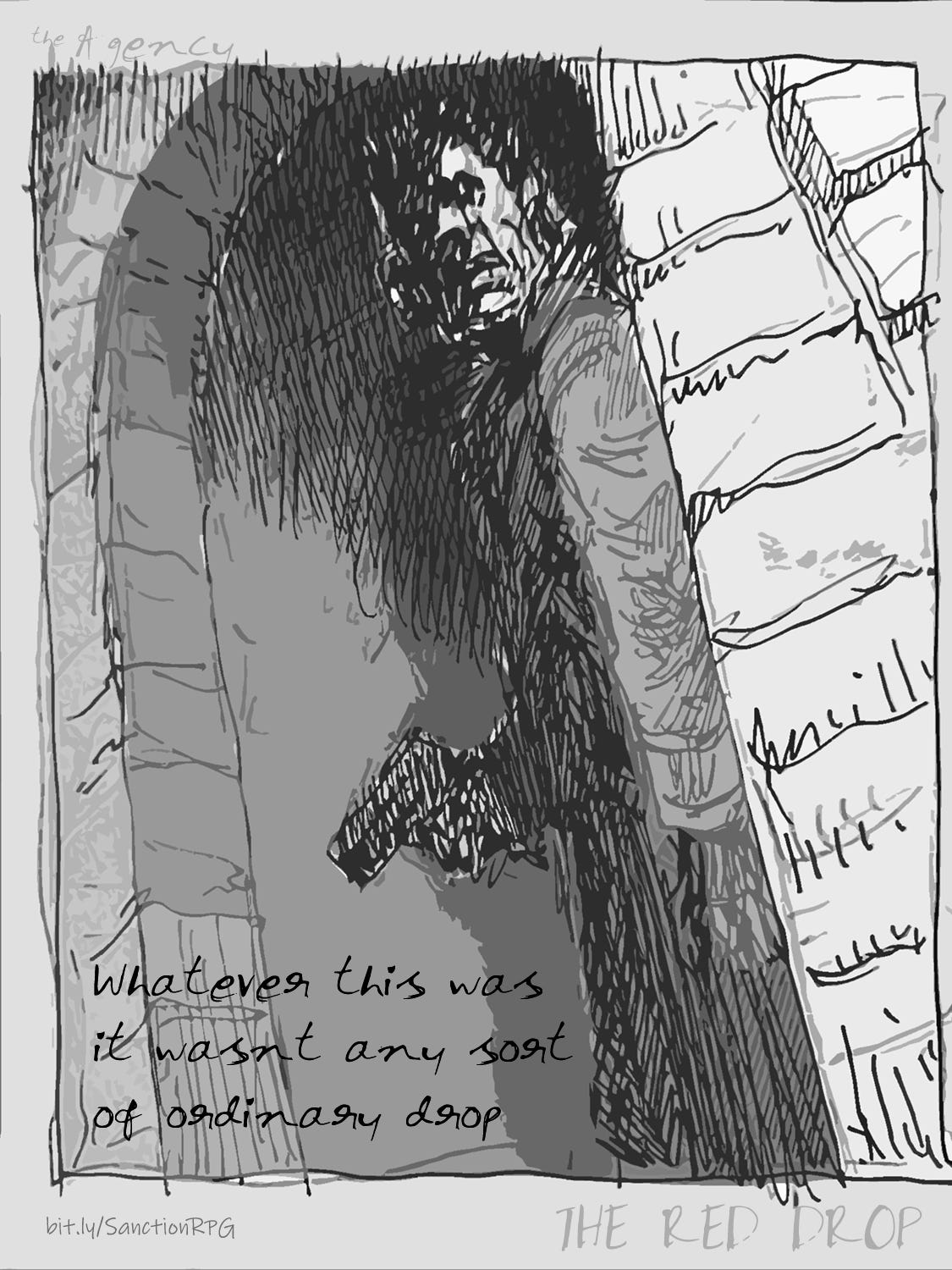
The lifepath in Sanction gives you three small fractures in an otherwise ordinary life. That’s enough. Enough to suggest history without entombing the character inside it. Enough to provide tension without requiring excavation. Because excavation is slow. And often solitary. Roleplaying games are not memoir workshops. They are shared acts of momentum.
When you define yourself through coffee preferences, commuter routes, cheap deodorant, broken headlights, unread travel magazines, and who forgot to replace the instant coffee again, you are building something playable. Something social. Something that other people at the table can touch without fear of breaking it.
Over the course of a campaign, the extraordinary will come, and with it, conspiracy will intrude, and horror will stain the edges of your soul. But those moments matter because they disrupt the ordinary, and disruption is a big deal—it certainly isn’t helpful in a convention one-shot, and even as part of a home game campaign, it must be carefully managed so as not to unravel everything.
Too Deep For My Liking
If everything begins at fever pitch, if every character arrives already carrying a cathedral of trauma, then there is nowhere for the story to go but collapse. The Game Moderator hesitates to prod. Other players hesitate to lean in. The backstory becomes glass: intricate, beautiful, and untouchable.
By contrast, commuter habits and breakfast burritos are sturdy, sufficient to take the weight of the story and spin out a tale worthy of recounting. They invite interaction. They create friction without fragility. They let the team become a team before the narrative asks them to become martyrs.
And when the time comes to press on the bruise? When the stain spreads? When that newspaper clipping suddenly connects to something much larger? It hurts. But it does so in a way that moves the story forward.
A Life Writ in the Shallows
You don’t need a hundred pages of childhood memories to justify courage. You don’t need genealogies to enable sacrifice. You need a small crack in the surface and the willingness to let the plot widen it.
Define yourself through the ordinary first. Let the extraordinary intrude later.
That way, when the moment comes to do something reckless, noble, or irreversible, you’re not protecting a museum exhibit of your past.
You’re protecting the people who share your coffee.
And that’s a far more powerful reason to act.
This Substack has become the infrequent home to my rambling about things relating to games, gaming, game mechanics, game moderation… just, game stuff. You’re welcome to comment, subscribe, and follow me on Blue Sky if you're so inclined.
You can find the whole in-print Sanction range at All Rolled Up and monitor the wider world of Sanction through the website or DriveThruRPG.
This is a perfect (and very beautifully written) explanation of why you should “bring a brick, rather than a cathedral.” I love it!